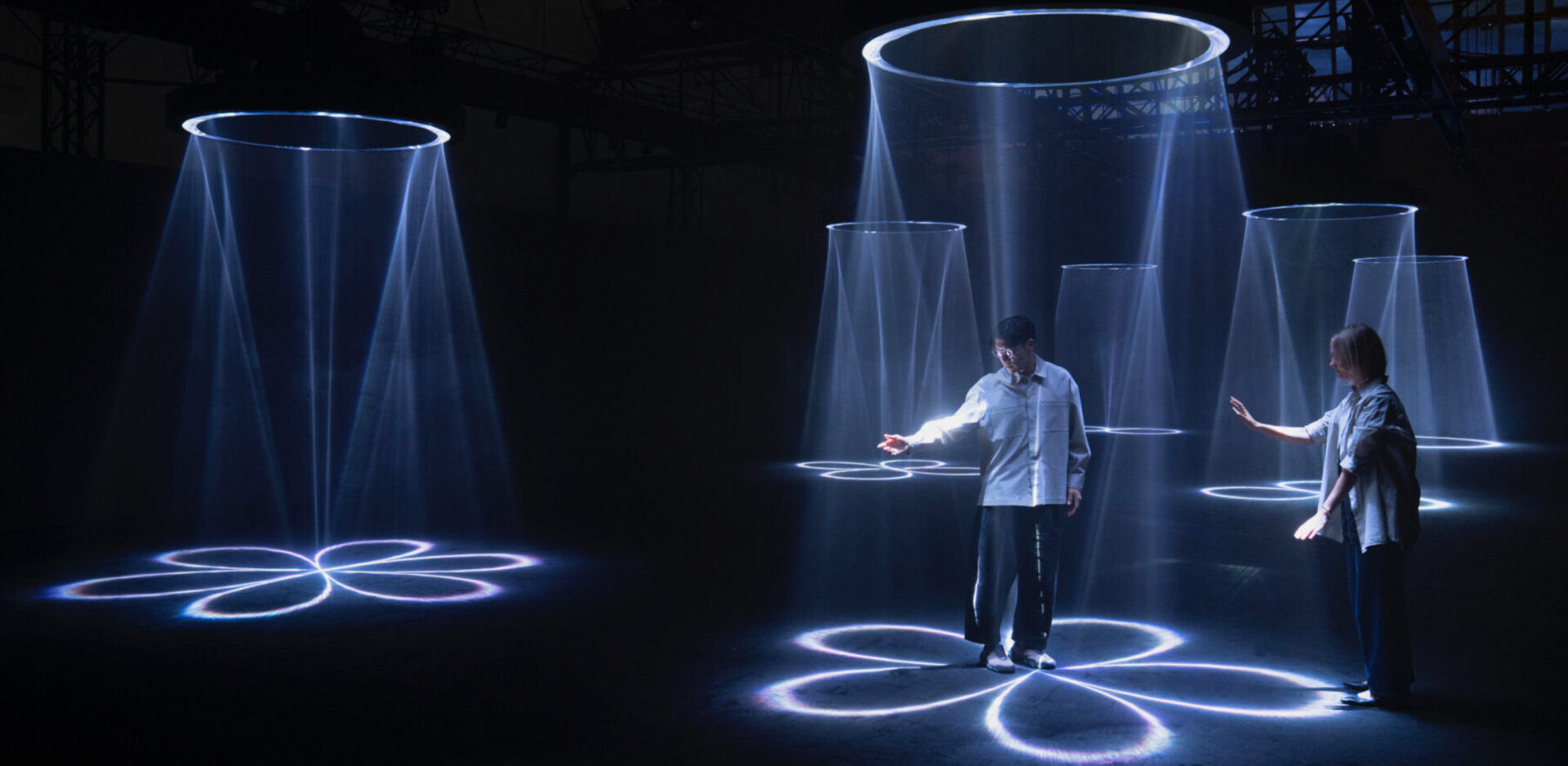
Lachlan Turczan’s Interactive Light Sculptures Illuminated Google’s Exhibition at Milan Design Week 2025
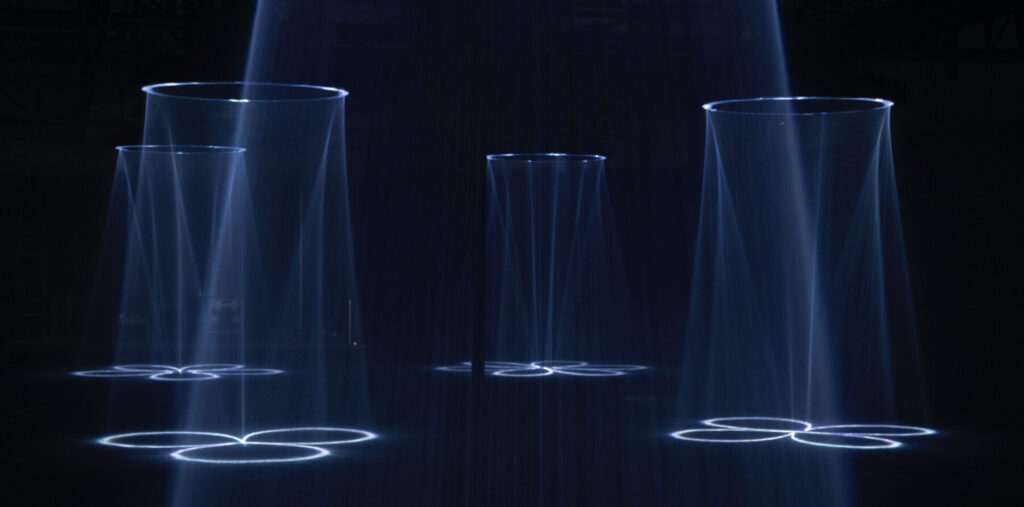
During Milan Design Week 2025, Google presented Making the Invisible Visible, a multisensory exhibition exploring perception, presence, and interaction. At the heart of it was Lucida (2025), a new series of interactive halo light sculptures by American artist Lachlan Turczan.
Lucida was a highlight of this year’s Milan Design Week, It’s a work that bridges art, design, science, and technology while maintaining a sense of calm, curiosity, and wonder – all work that excites us here at Neighbourhood. Work that invites participation and opens up new ways of sensing and shaping the spaces around us.
Presented inside Garage 21 on Via Archimede 26, Turczan’s work transformed the dark interior into a shifting landscape of light and movement. Visitors stepped into a space that responded in real time to their presence, no screens, no physical structures just light behaving like matter.
Turczan’s installation draws from his earlier Veil series, where optical effects create the impression of translucent, curtain-like layers made entirely from light. The new work builds on that foundation, inviting the public to move through, around, and within projected halos that appear to sway and fold like fabric in wind.
At a glance, the work seems immaterial. Yet behind the experience is a carefully engineered technical system of lidar, infrared, and standard vision cameras, paired with a custom-built annular optic system. These sensors detect visitor positions as they move through the room, modulating the behaviour of projected circles on the floor.
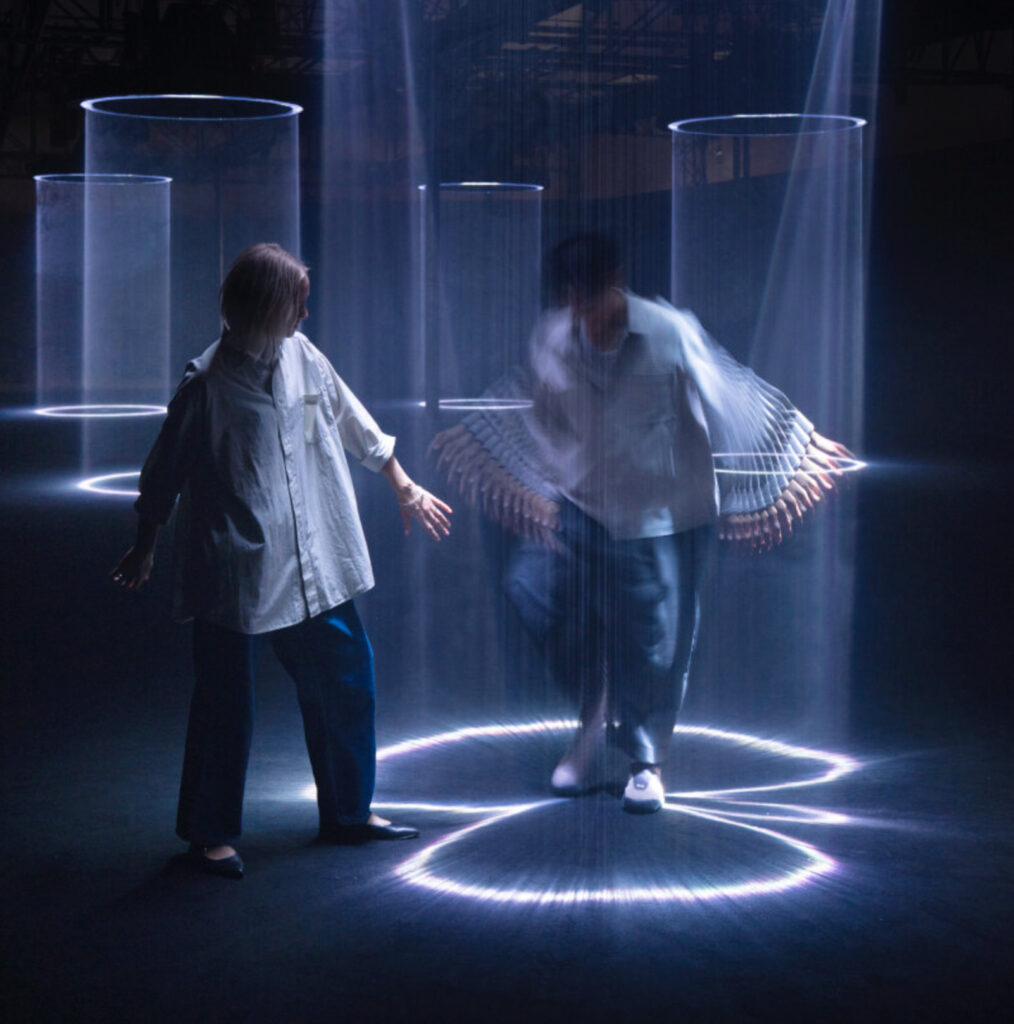
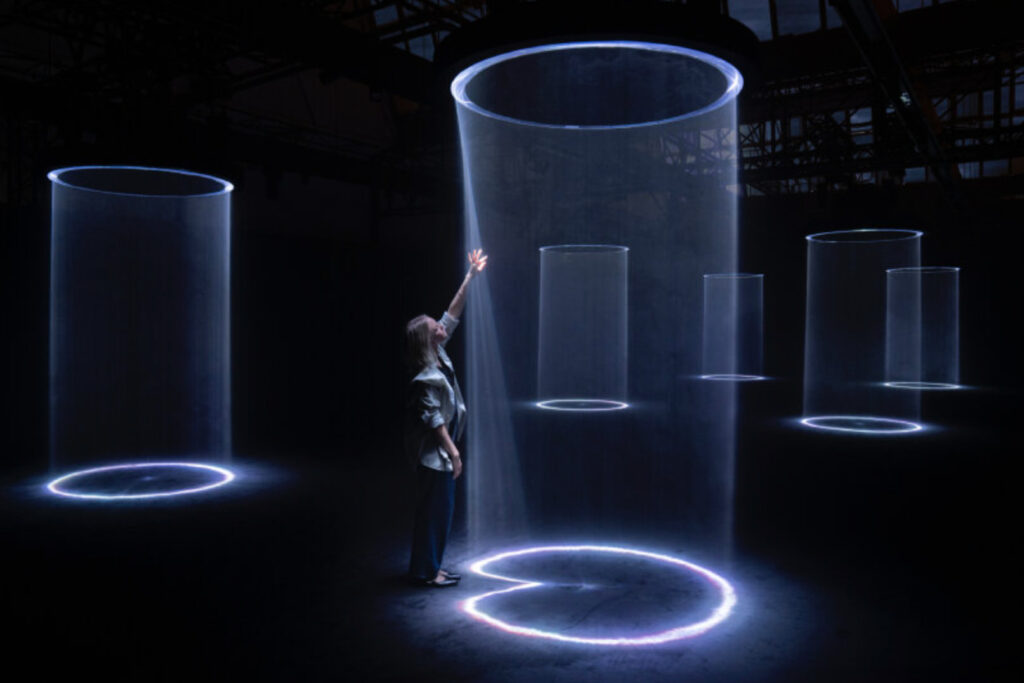
The result was an impressive constantly changing play of light. The choreography unfolds in six distinct folds, each creating new harmonic divisions of space. It’s spatial design without walls, driven entirely by optics and interaction.
The palette, white, purple, and deep blue comes from a full-spectral RGB laser system. While capable of bright, saturated colour, the current setup focuses on intensity over variety. The goal is clarity and brightness within a narrow range, making the light feel architectural and almost tangible.
All images courtesy of Google.


Qualeasha Wood Is Turning the Internet Into Tapestry
The Philadelphia-based artist is weaving the digital self into tapestry

Mega Mat: Bangkok’s Vibrant Platform for Sustainability and Community
Mega Mat is a modular piece made of over 500 recycled plastic mats, showcasing the possibilities for using recycled plastic in everyday objects.