Mega Mat: Bangkok’s Vibrant Platform for Sustainability and Community

During Bangkok Design Week 2025, visitors to Laan Kon Muang Plaza are greeted by a striking splash of color and texture — Mega Mat, MVRDV’s latest temporary installation.
This expansive 860-square-meter platform, composed of over 500 recycled plastic mats, reimagines public space while sparking critical conversations about sustainability in Thailand.
Designed as both a communal gathering spot and an educational experience, Mega Mat draws attention to the pressing issue of plastic waste. Thailand produces approximately two million tons of plastic waste each year. In response, initiatives from both industry and government seek to curb plastic consumption and improve recycling practices. MVRDV’s contribution, Mega Mat, not only highlights the versatility of recycled materials but also underscores their potential in reshaping urban environments.
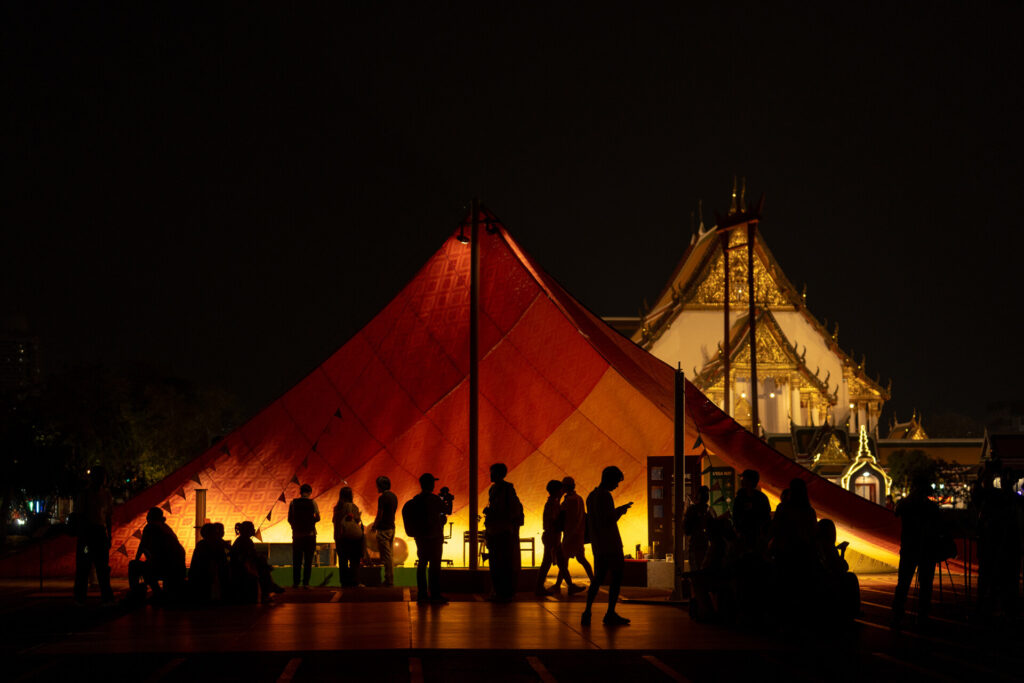
Inspired by the Sua-mat — the traditional woven mat found in Thai households — Mega Mat brings cultural heritage into a modern urban context. The installation comprises 552 modular pieces arranged in vibrant textile patterns, transforming the city square into an inviting public lounge. Throughout Bangkok Design Week, visitors are encouraged to sit, relax, and engage with the space.
What’s most remarkable about Mega Mat is its lifecycle. Once the event concludes on February 23rd, the installation will be dismantled and its components repurposed — distributed to local temples, converted into yoga mats, or upcycled into bags and various other products. This process embodies the circularity that the project aims to promote.

Mega Mat’s vivid colors do more than captivate the eye — they tell a story. Each hue corresponds to a specific facet of Thailand’s plastic waste management system:
Red: Waste in unprotected landfills
Orange: Waste directed to sanitary landfills
Yellow: Uncollected waste
Green: Recycled plastic (strategically placed at the heart of the installation)
This visual language serves as both an aesthetic choice and an informative infographic. The color scheme also nods to the ornate roofs of Wat Suthat Thepphawararam, located nearby, creating a bridge between contemporary design and local architecture.
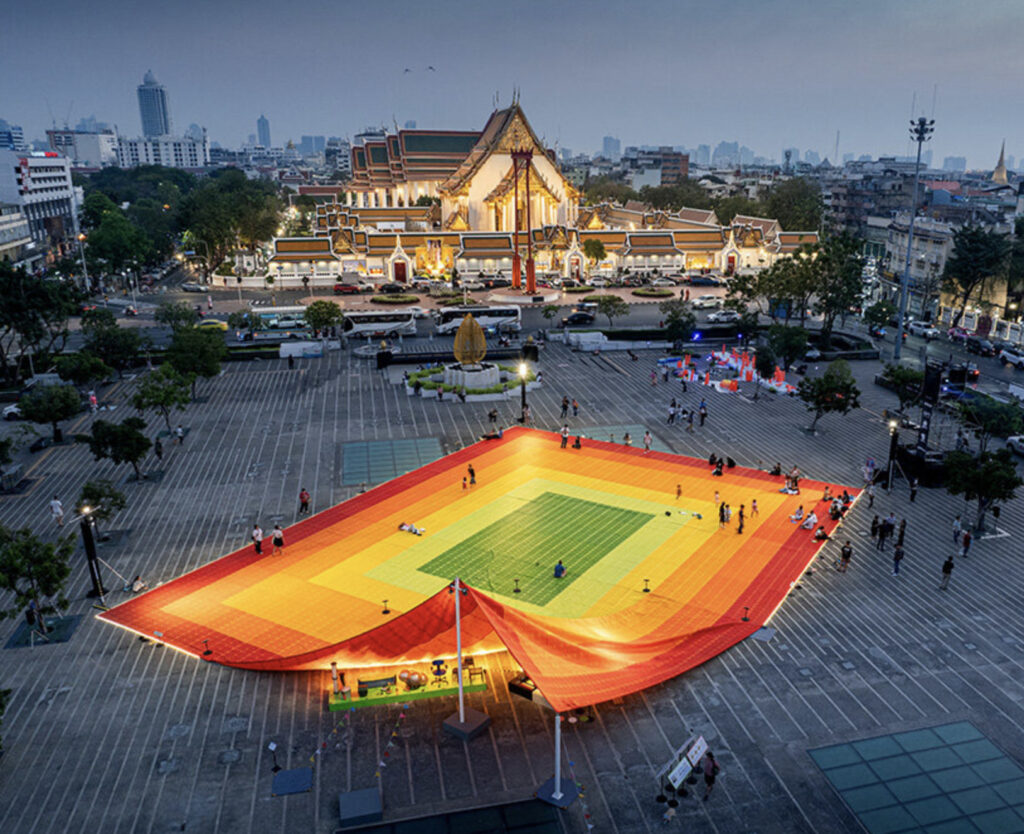

Adding another dimension to the installation, one corner of the Mega Mat rises gracefully into the air, forming a sheltered pavilion. Beneath this arc, visitors can explore an exhibition detailing the complexities of plastic waste and recycling in Thailand. The upward curve of the structure evokes the traditional rooflines of Thai temples, offering both shade and a contemplative space for learning.
Mega Mat reflects MVRDV’s broader commitment to sustainable design. The firm, known for championing low-carbon solutions, recently launched the Carbon Confessions exhibition in Munich and developed CarbonScape, a tool for reducing emissions during architectural planning. Through these efforts, MVRDV strives to create Paris Proof designs and foster meaningful dialogue around environmental responsibility.
The Mega Mat project is the result of a dynamic collaboration between the Creative Economy Agency, PTT Global Chemicals, and the Dutch Embassy in Thailand. Beyond this vibrant platform, MVRDV’s presence at Bangkok Design Week includes PROMT PARK — an AI-driven project aimed at revitalizing underused urban spaces — and a lecture by Winy Maas at Silpakorn University, both reinforcing the studio’s dedication to sustainable urban innovation.
While Mega Mat’s presence in Laan Kon Muang Plaza is temporary, its message resonates far beyond the boundaries of the plaza. By transforming recycled materials into a communal work of art, MVRDV encourages us to rethink how we interact with waste, public spaces, and one another. As Bangkok Design Week concludes, Mega Mat’s journey continues — woven into the fabric of everyday life.
Photography Credits: © Depth of Field Co. | @dofskyground