Mega Mat: Bangkok’s Vibrant Platform for Sustainability and Community
Mega Mat is a modular piece made of over 500 recycled plastic mats, showcasing the possibilities for using recycled plastic in everyday objects.
Qualeasha Wood is part of a new generation of artists turning digital culture into material form. But she’s doing it in a way few others are—by weaving it, literally, into existence.
Born in 1996 in Long Branch, New Jersey, Wood’s first computer came from her grandmother when she was just five years old. It became an early portal to virtual life. Years later, it would become a foundation for her art. Now based in Philadelphia, she uses that early intimacy with digital space to explore how identity—particularly Black femme identity—is formed, performed, and fractured online.
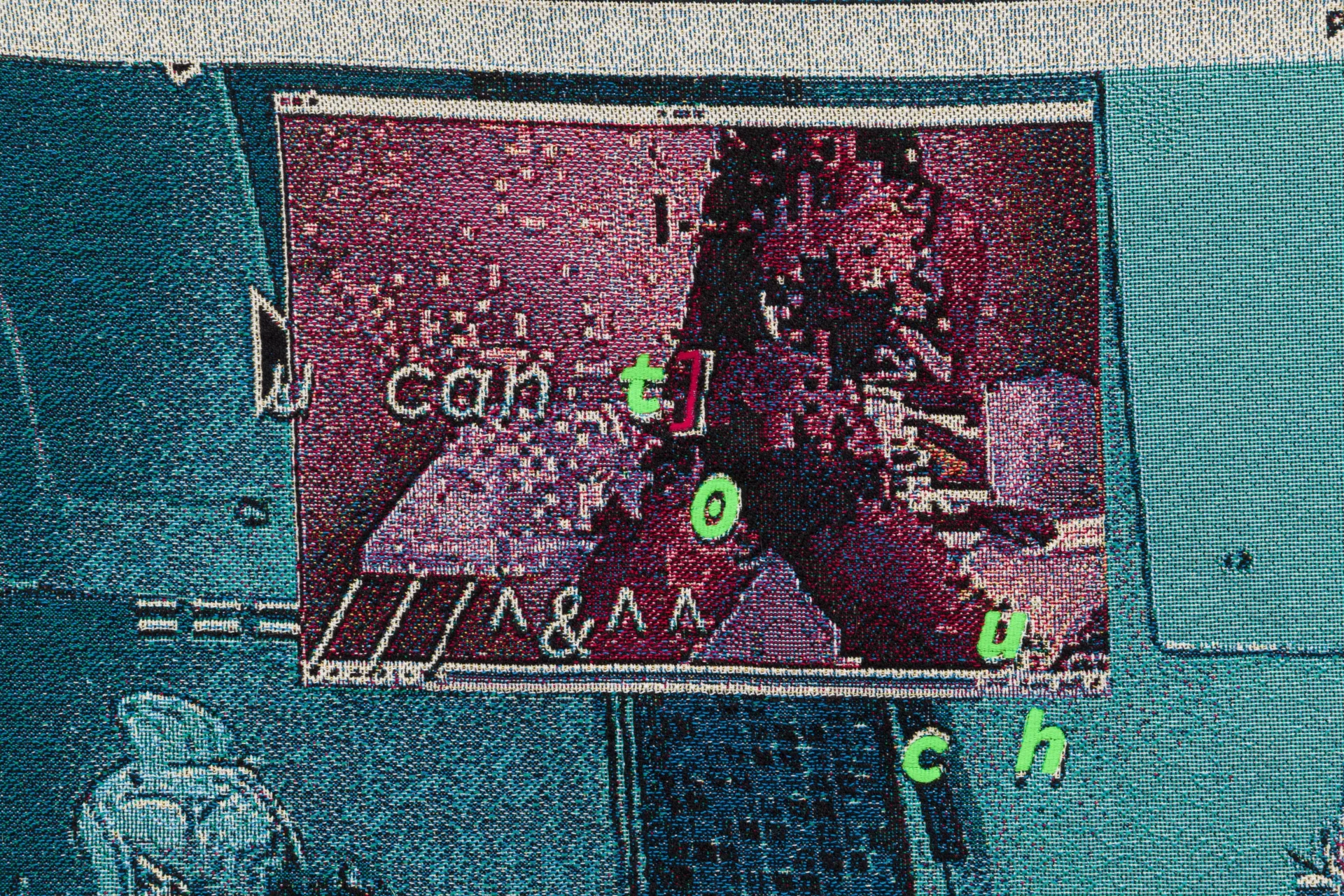
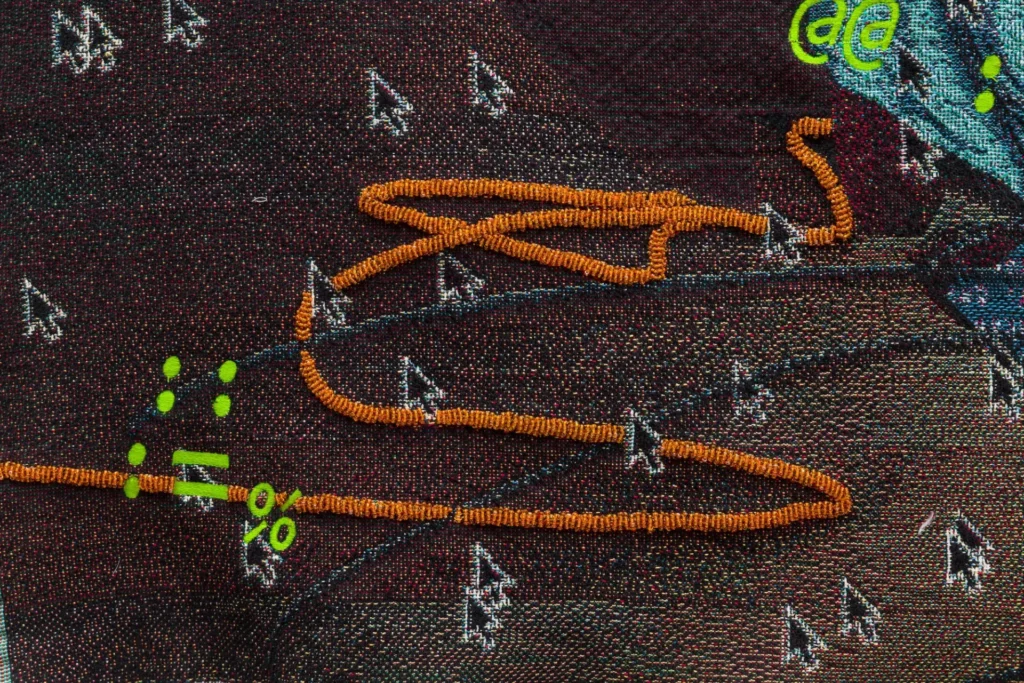
Wood’s medium is tapestry. But not in the traditional sense. She works with a computerized jacquard loom, a tool that allows her to render screenshots, glitches, interface windows, memes, and avatars into dense, woven cloth. Through this process, ephemeral digital artifacts become physical. They take on weight, texture, and permanence. The result is unsettling and powerful—Instagram aesthetics wrapped in wool, chat boxes stitched in metallic thread, digital selves held in woven space.
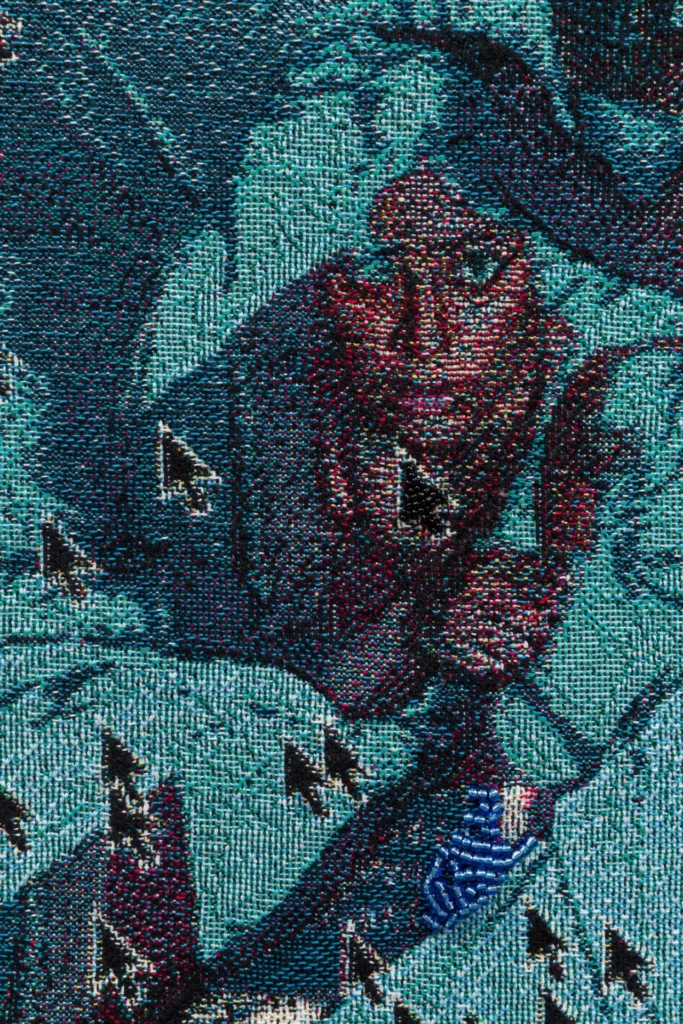
The tension is intentional. In Wood’s work, speed becomes slowness. Virtual becomes tactile. She’s interested in what it means to take images made for rapid consumption and slow them down into something you have to look at—something you can’t swipe past. In doing so, she opens up space to reflect on how we’re seen and how we see ourselves in the digital world.
Her recent show Malware at Pippy Houldsworth Gallery in London made this clear. Tapestries, tuftings, and video pieces drew on her own archive of digital life—camera rolls, saved posts, online avatars. The show explored the “glitch” not only as a technical fault but as metaphor: the Black femme body as a kind of interruption within dominant visual systems. For Wood, this glitch isn’t a malfunction—it’s an assertion of presence. One that challenges the systems that too often distort or erase.

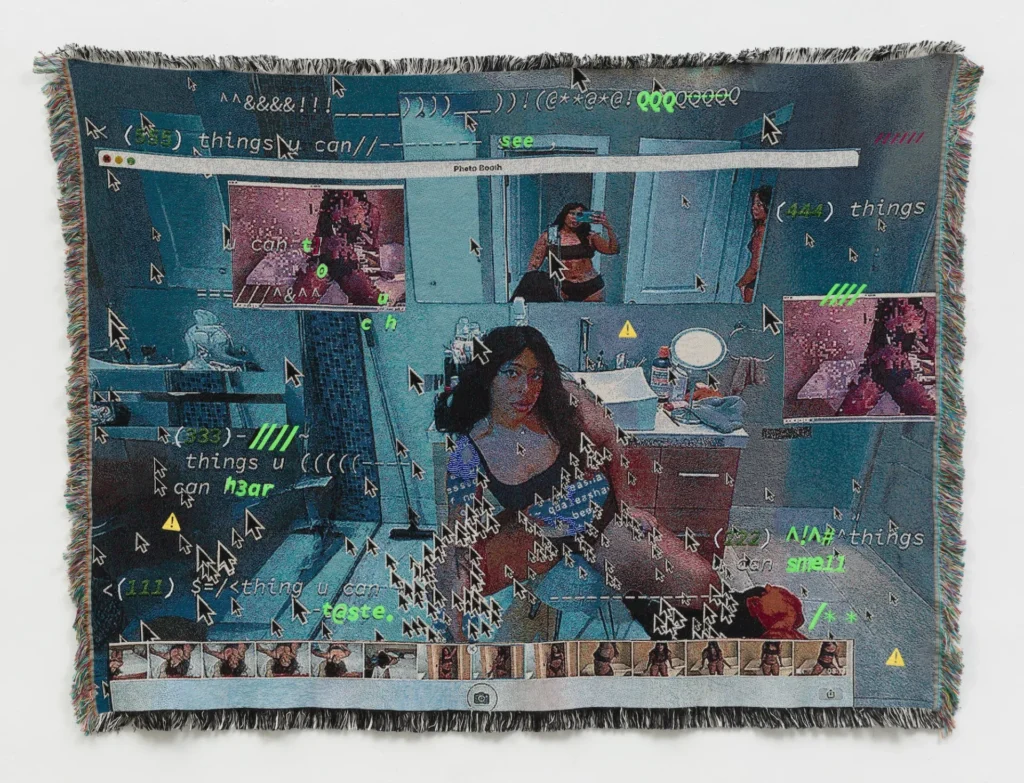
Her influences reflect this layered, hybrid approach. She draws from theory, fandom, Solange, Grimes, and Björk. Her visual sensibility echoes Hype Williams’ lush, surreal videos and the eerie distortions of David and Brandon Cronenberg. There’s also a strong connection to religious iconography—an echo of her Christian upbringing—which she reconfigures through a digital lens. A kneeling avatar takes on the posture of a saint. A text message becomes scripture. In her work, the sacred and the virtual collapse into each other.
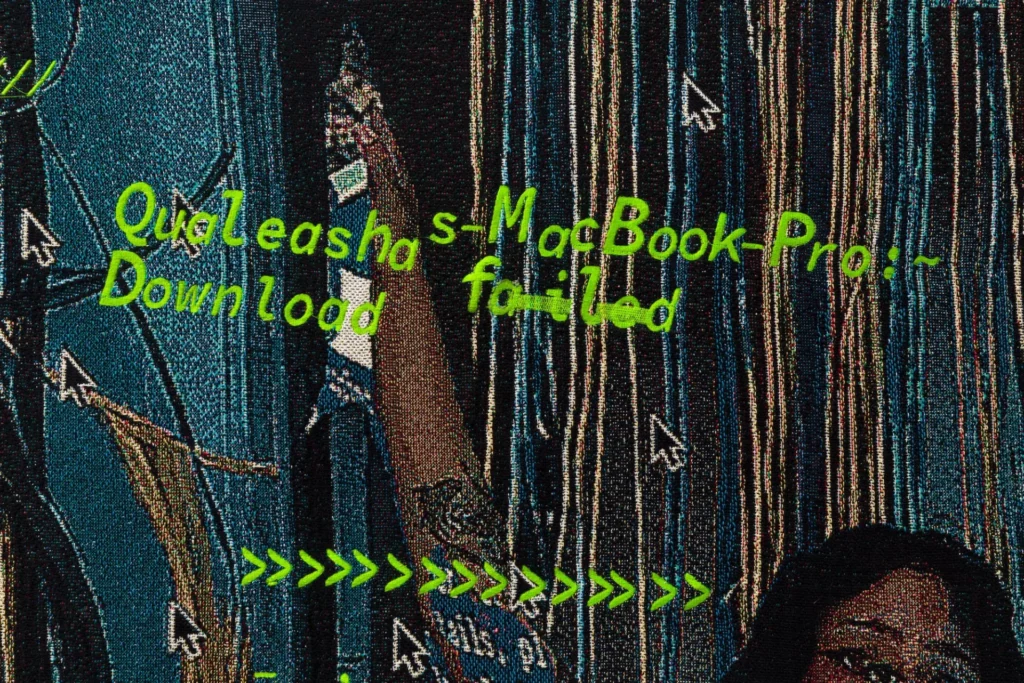
Recognition has come quickly. In 2021, her piece The [Black] Madonna/Whore Complex was featured on the cover of Art in America. The Metropolitan Museum of Art acquired it soon after, making her one of the youngest artists in their collection. Since then, she’s exhibited at MoMA PS1, the Studio Museum in Harlem, the Art Institute of Chicago, and beyond.
Yet her work resists easy categorisation. It’s not just about technology or identity or craft. It’s about what happens in the friction between those things. It’s about how the internet becomes part of the body, and how the body leaves traces on the internet.

Mega Mat is a modular piece made of over 500 recycled plastic mats, showcasing the possibilities for using recycled plastic in everyday objects.