Mega Mega: Romford’s Suburban Sound Revolution
Mega Mega will be an immersive exhibition exploring a decisive decade in Romford’s electronic music and club culture, from hardcore and jungle to garage and drum & bass.
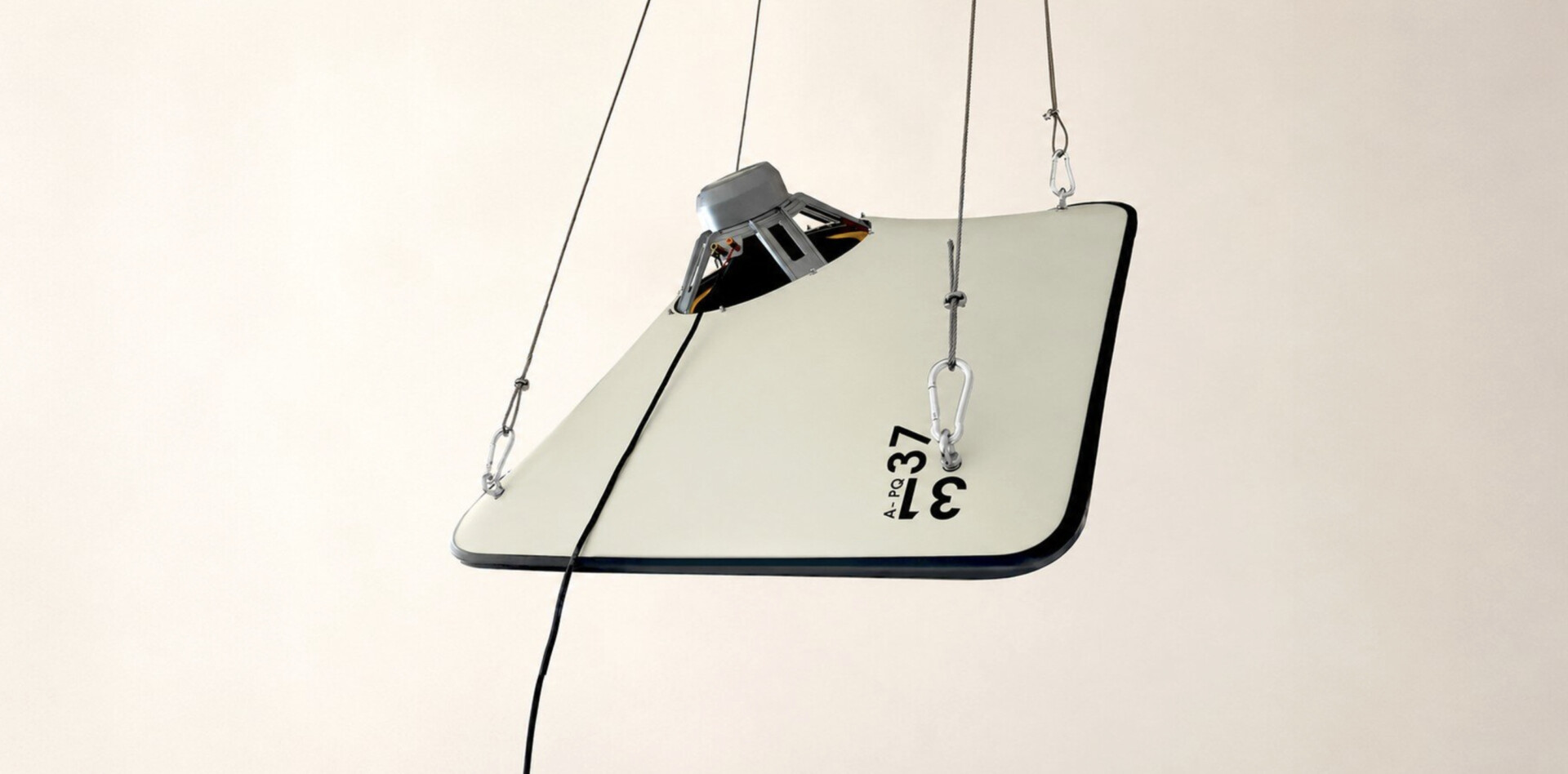
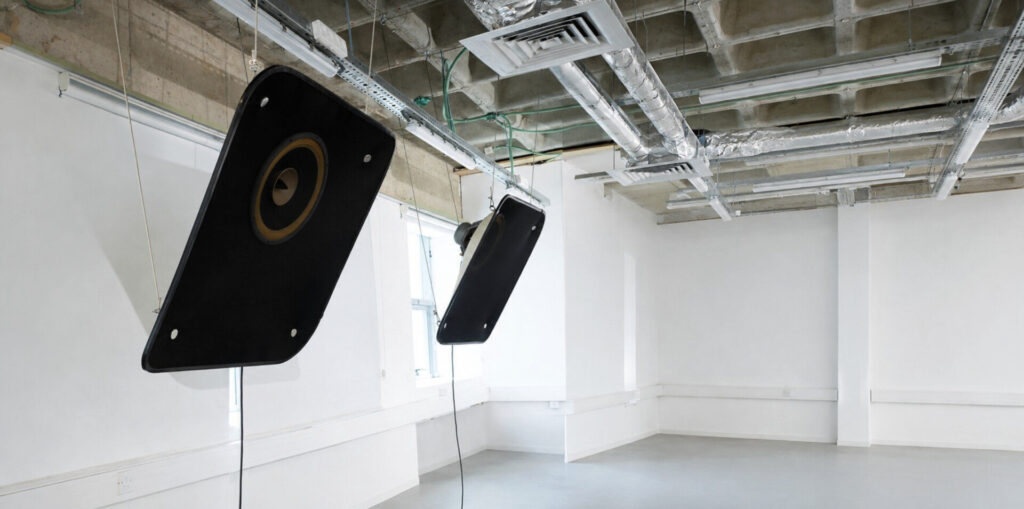
Hagar Guri’s A PQ 31.37 points towards a wider shift in the relationship between sound, objects and interiors; and it’s one we think about constantly at NBHD: the physical world is a communications channel, whether anyone designs it that way or not.
For much of the recent history of consumer technology, progress has meant disappearance: devices have shrunk, controls stripped away, cables concealed. Sound followed the same path. The domestic speaker moved steadily towards something discreet or invisible, disappearing into ceilings, walls and wireless systems. Convenience improved enormously. What got lost along the way was presence, and presence is exactly what communicates.
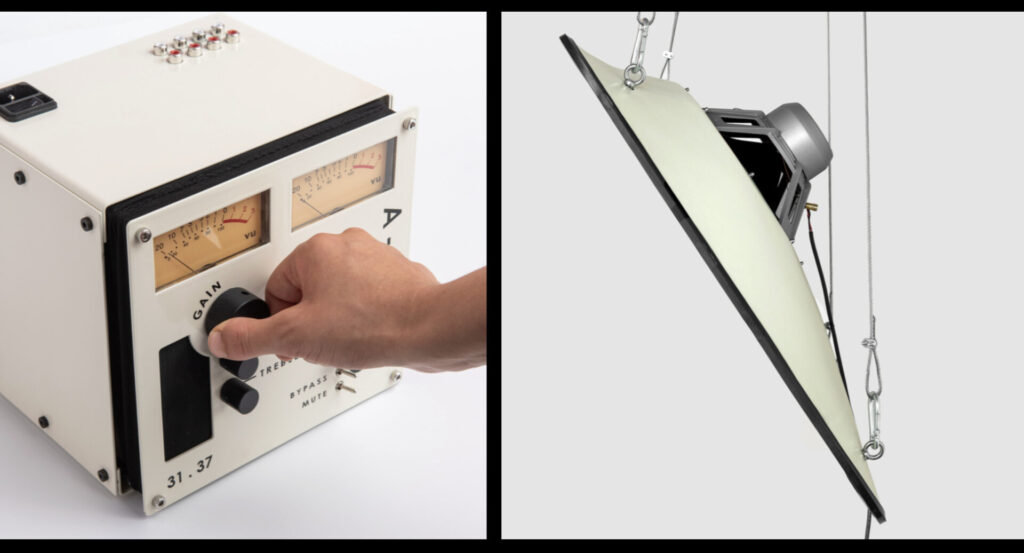
A PQ 31.37 moves in the opposite direction. The suspended open baffle loudspeaker doesn’t try to disappear into a room – it occupies it. Formed using Concrete Canvas, a material developed for construction and civil engineering, the speakers hang from steel cables with their drivers, wiring and structural elements fully exposed. There’s no cabinet, no attempt to disguise how the object works. The result sits somewhere between audio equipment, industrial structure and sculpture, and before it’s played a single note, it’s already saying something.
Every object in a space is sending a message, whether or not it was designed to. A concealed speaker says “don’t think about this.” A-PQ 31.37 says the opposite: look at how this works, understand it, and something about the listening experience will feel more considered.
This fits a broader pattern we’re watching across retail and culture. High fidelity systems are becoming objects of interest beyond audiophile circles. Listening rooms are appearing in galleries, hotels and retail spaces, considered alongside furniture and lighting rather than treated as pure infrastructure. Sound is becoming part of how a place tells you who it is before a member of staff says a word, before a single piece of copy is read.
Listening bars are the clearest expression of this. Their appeal isn’t just better speakers — the sound system becomes part of the atmosphere and identity of the space itself, communicating intent to anyone who walks in. Turntables and amplifiers are deliberately visible; records sit within reach. The equipment does PR for the room. The same shift shows up beyond hospitality: Devon Turnbull’s OJAS systems have brought high fidelity listening environments into museums, fashion and design, positioning listening as the central activity a space is organised around, and the space’s message along with it.
It’s a useful reversal for anyone in our line of work to sit with. For decades, progress pushed the idea that the best interface was no interface – and by extension, the best communication was the most frictionless. Streaming stripped away almost every physical action that once surrounded listening. That accessibility transformed how music circulates, but it also removed a channel through which meaning used to travel: the object itself. The renewed interest in vinyl, dedicated listening spaces and considered sound systems looks like people rediscovering that objects can say things words can’t.
None of this is about wanting technology to be more complicated. It’s a reminder that objects shape behaviour and carry messages whether or not anyone’s steering them. A large speaker changes a room. A turntable asks something different of a listener than a phone does. A listening room sets a particular relationship between people, music and time – and that relationship is, whether intended or not, a piece of communication design. A PQ 31.37 makes this hard to ignore: its material suggests permanence and mass, yet its suspension lifts it clear of the floor, concrete rendered almost weightless. The exposed cables and drivers resist the seamlessness of most contemporary products, and that tension is doing real work 0 it’s telling you this object was made with intent, not just assembled.
That’s the brief we’d give any brand thinking seriously about physical space: sound, material and object choices aren’t finishing touches applied after the story is written. They’re part of how the story gets told, often before a single word does. A sound system can do more than reproduce music – it can create focus, shape how people gather, and signal seriousness or intent, becoming part of the visual and sonic language through which a space understands itself and communicates that understanding outward.
Perhaps the interesting shift isn’t that speakers are becoming more beautiful. It’s that we’re remembering objects have always been talking, we’d just trained ourselves to stop listening.