Growing Album – A Living Work by Ewelina Bialoszewska
Rooted in memory and growth, this photobook lets you plant fragments of home wherever you go.
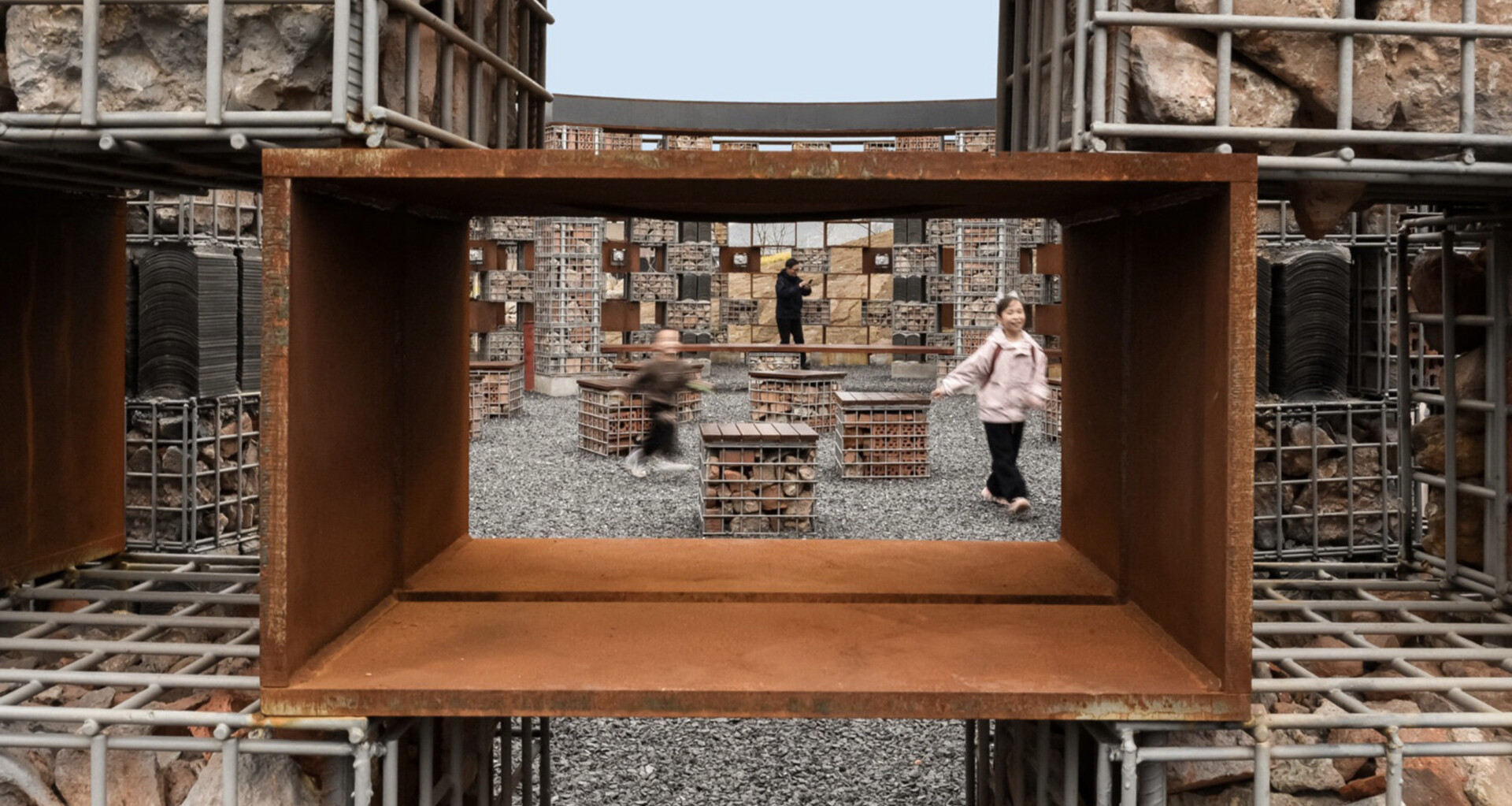

Old industrial sites often sit in an in between state, no longer useful in the way they once were yet still carrying the weight of the everyday lives that passed through them. In the Chinese city of Zhuzhou, one of these former factory districts has been reimagined as a public cultural space by 1Y Architects, a young practice founded by Fan Chang and Liu Yangcheng.
Rather than clearing the land and starting again, the new urban landmark project builds directly from what was already there, turning leftover fragments into a new environment shaped for gathering, listening and moving through memory at a human pace.

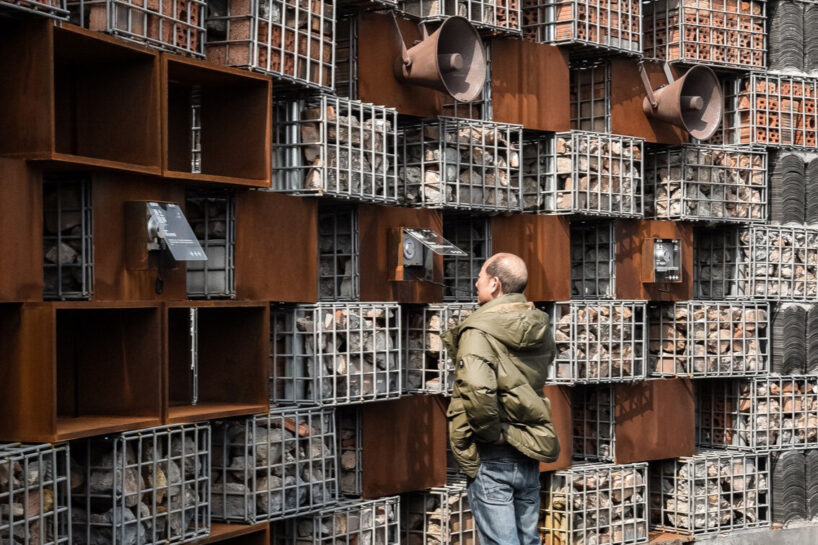
The architecture is formed almost entirely from reclaimed materials taken from demolished buildings on the site. Bricks and broken tiles have been carefully restacked into circular walls that create a loose network of paths and open pockets of space. Nothing feels overly polished or forced into symmetry. The experience is closer to walking through a landscape that has been gently reorganised rather than formally imposed. Visitors move in and out of curved routes that reveal moments of quiet enclosure before opening back into shared areas. This sense of discovery becomes part of how the place is understood.
Another layer that gives the project real presence is the way sound is treated as something physical rather than purely atmospheric. Directional speakers are embedded within the brick walls so that voices appear and fade as people move through the circular routes, creating moments where memory feels almost spatial. At certain points visitors can pick up magnetic headphones to focus on individual recordings, shifting from shared ambience to more personal listening. Small recording stations allow new reflections to be added over time, meaning the soundscape continues to evolve through use. The environment encourages people to slow down, pause and tune into fragments of lived experience connected to the site, allowing history to feel active rather than distant.
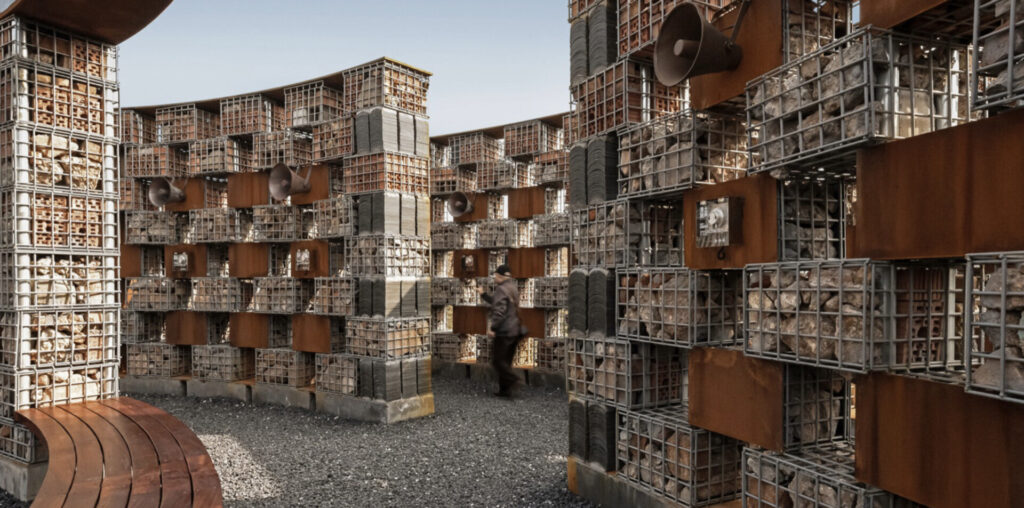

At the centre sits a circular amphitheatre that acts as a natural meeting point. It can host small performances, informal talks or simply offer somewhere to sit and take in the surroundings. Families, older residents and younger visitors all experience the space in different ways, which adds to its energy. Children treat the winding corridors almost like a playground, while others move more slowly, recognising traces of a past they remember. This mix of reactions gives the project a sense of life that could never be fully planned on a drawing board.
What makes the intervention stand out is its quiet confidence. It does not try to romanticise the past or turn it into spectacle. Instead it shows how reuse can be both practical and meaningful, turning leftover material into a setting that encourages connection.
At a time when many cities redevelop by wiping the slate clean, this approach suggests another path. One that builds new cultural value by paying attention to what already exists. It is a reminder that creative thinking does not always begin with a blank canvas. Sometimes the most interesting ideas start by listening more closely to the ground beneath your feet.

Rooted in memory and growth, this photobook lets you plant fragments of home wherever you go.

Pivi’s intervention, playful and jarring, interrupts the classical symmetry of the space

Exploring perception, presence, and interaction